

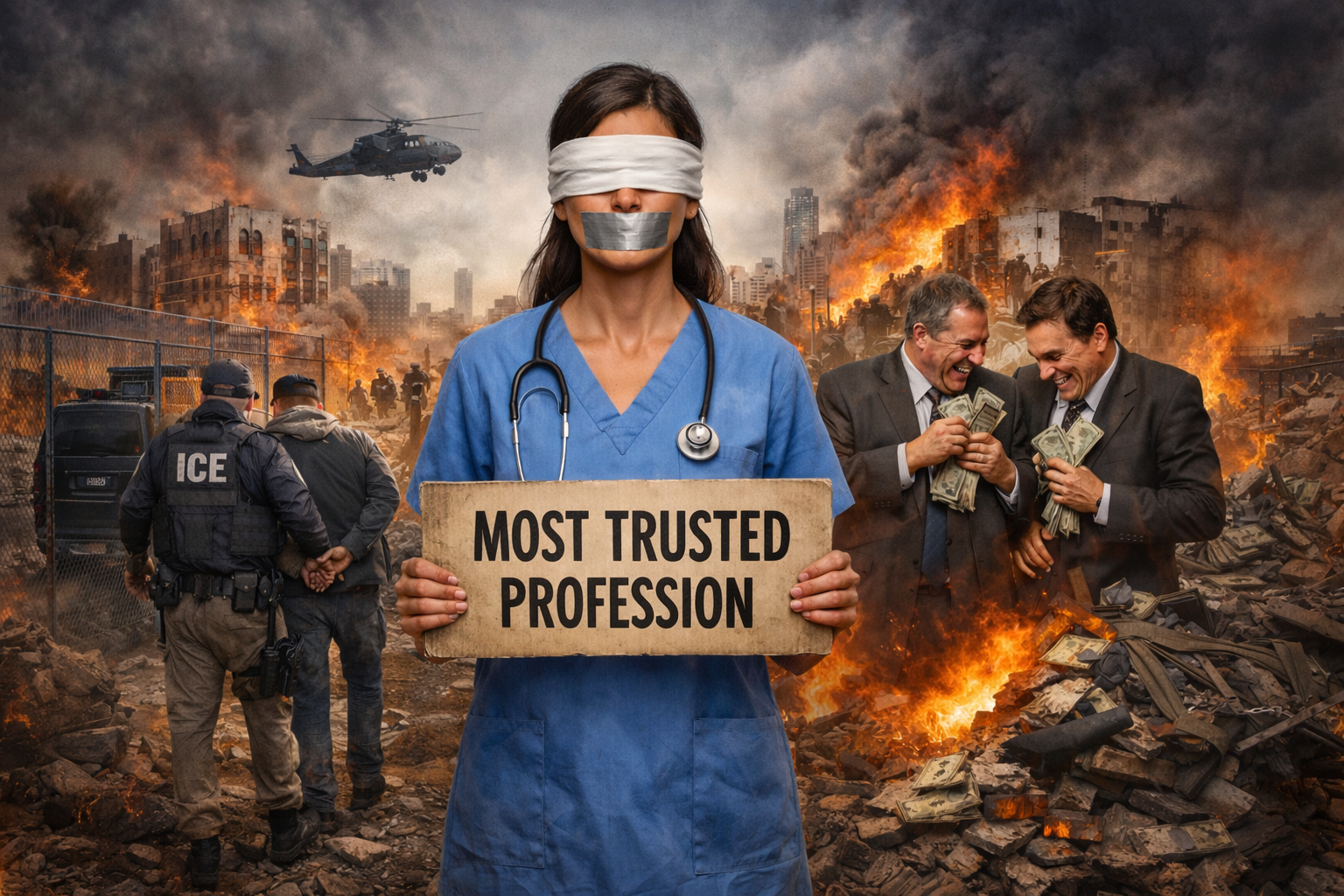
I have found myself in a strange place lately. Not able to recognize the institutions I have associated myself with in my adult life. Disillusioned by policies that harm, create bias, and destroy progress decades in the making…
Nursing spends a great deal of time talking about advocacy. Can’t read or hear anything nursing related without the Gallup polls being mentioned!
We think we teach it in undergraduate programs. We think we emphasize it in graduate education. We often see it placed in mission statements, codes of ethics, and professional frameworks. Students learn about social determinants of health, structural inequities, global health, and the ethical obligation to advocate for vulnerable populations.
But when global events unfold that directly impact human health, the profession often becomes remarkably quiet.
Hospitals are destroyed. healthcare workers are killed. tens of thousands of children die in conflict zones. Entire populations are displaced. Veterans return home carrying the visible and invisible wounds of war.
These are not distant geopolitical abstractions. They are public health realities. They are nursing issues.
Yet the response from many professional organizations is silence. Subjects untouched! Spoken in whispers and behind closed doors in private conversations. But what is the cause and fear? Fear to speak publicly?
Institutional policies frequently discourage engagement with geopolitical issues under the banner of remaining “non-political.” Leaders caution against statements that may be perceived as controversial. Members are reminded to stay neutral. Enforced by their HR watchdogs! Fearful they may be perceived to care about human life that doesn’t align with the national agenda!
What emerges is a professional culture where nurses are encouraged to advocate inside the walls of their institutions but discouraged from speaking about the forces shaping health outside them.
Advocacy becomes safe, sanitized, and carefully contained.
The message may never be spoken directly, but it is clearly understood: stay in your lane, and many do!
For many nurses, this creates a quiet tension. They see the humanitarian consequences of global conflict in their practice, among refugees, veterans, displaced families, and communities living with trauma. They understand the ethical implications. But organizational policies and professional expectations create hesitation. The risk of speaking begins to outweigh the perceived permission to do so.
Over time, silence becomes normalized. Neutrality becomes confused with professionalism. And the profession that prides itself on moral courage becomes cautious about when that courage can be exercised.
This is not simply an organizational issue. It is a professional identity issue.
If nursing claims a commitment to human dignity, health equity, and global health, then those commitments cannot disappear the moment they intersect with geopolitics.
Health does not exist in isolation from the world’s conflicts. War, displacement, sanctions, occupation, and political violence all shape who becomes sick, who receives care, and who survives. Nursing should understand this!
The question is whether nursing is willing to acknowledge that silence in the face of these realities is not neutrality. It is a choice. And choices shape the moral character of a profession. Advocacy cannot only exist when it is comfortable. Otherwise, it was never advocacy to begin with.
